
What is 'Paris Respire' and how can it affect your trip?
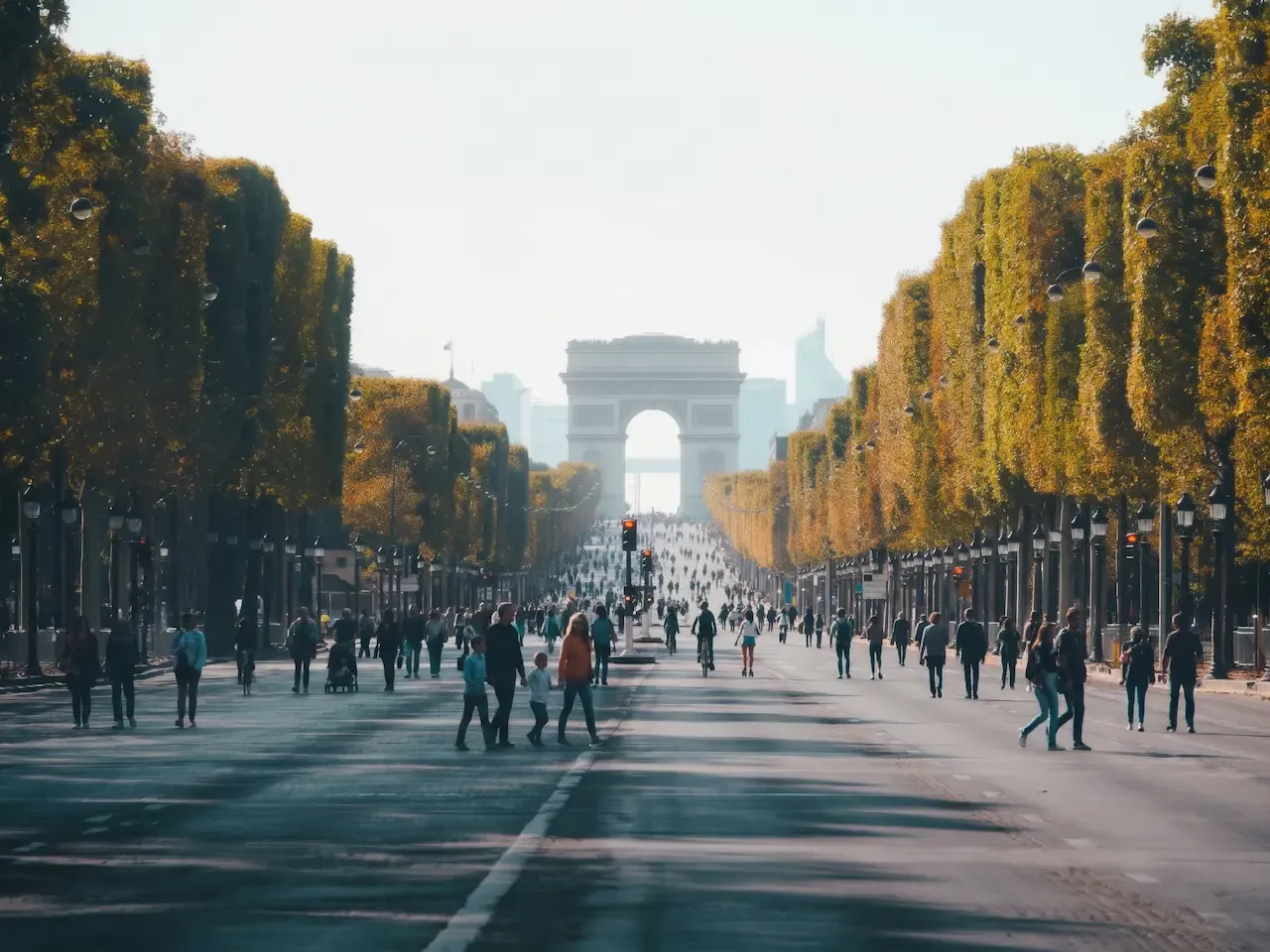
Travelers planning an itinerary through Paris routinely track museum schedules, train bookings, and neighborhood maps, yet a municipal program known as 'Paris Respire' ('Paris Breathes') reshapes the operational rhythm of the French capital on the first Sunday of every month. Because 'Paris Respire' bars motorized traffic across central sectors during these designated Sundays, while maintaining recurrent weekend closures in select outlying quarters, it alters how streets function, shifts pedestrian flow across major commercial corridors, and reroutes conventional transit options. Understanding this timing and structural footprint ensures smooth navigation across the capital.

How 'Paris Respire' changes street movement across central Paris
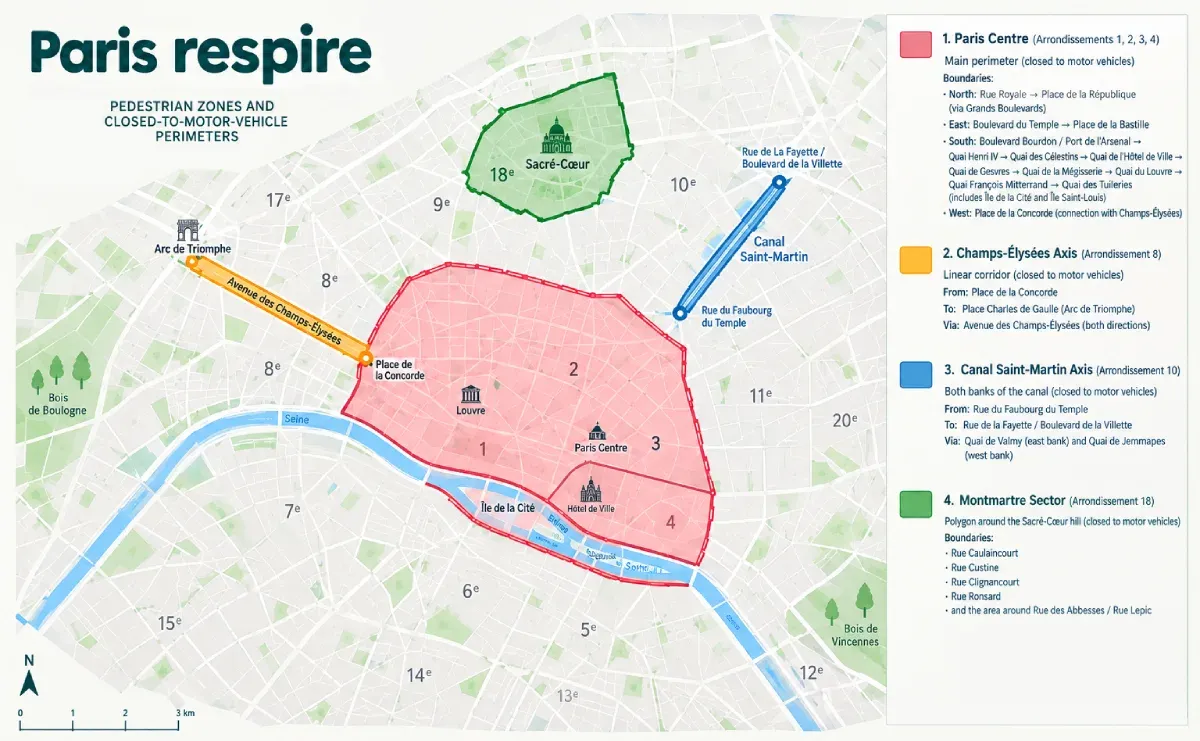
'Paris Respire' reserves municipal roadways exclusively for pedestrians, cyclists, and non-motorized transport by temporarily prohibiting unauthorized motor vehicles. Rather than shutting down the entire city at once, the program designates specific zones: the central 1st, 2nd, 3rd, and 4th arrondissements participate on scheduled Sundays, while peripheral districts such as Montmartre, Canal Saint-Martin, and the Seine riverbanks enact restrictions every weekend and public holiday.
For travelers, the initiative alters local mobility by preventing taxis and rideshares from dropping passengers directly at hotel entrances within enclosed perimeters, forcing bus lines to reroute, and compelling visitors to navigate these sectors on foot or via the underground metro.
'Paris Respire' map
To navigate the capital efficiently during enforcement hours, visitors must distinguish between exterior boundary boulevards that absorb diverted traffic and interior corridors that exclude private vehicles entirely. Municipal authorities define the primary restriction through a continuous polygonal boundary encompassing the historic center, supplemented by dedicated linear and neighborhood zones across northern and eastern districts:
What are the dates for 'Paris Respire' in 2026?
The City of Paris structures 'Paris Respire' around a bifurcated calendar, enforcing the comprehensive city-center closure (Paris Centre) on the first Sunday of each calendar month while maintaining recurrent weekend pedestrian zones across specific outlying quarters. Visitors arriving during the final two months of 2026 encounter these street closures on the dates listed below:
| Date | November 1, 2026 |
|---|---|
| Closure Type | Monthly Citywide & Local |
| Impacted Zones | Paris Centre (Arrondissements 1–4), Champs-Élysées, Montmartre, Canal Saint-Martin, Bassin de la Villette |
| Enforcement Hours | 10:00 – 18:00 |
| Date | November 8, 2026 |
|---|---|
| Closure Type | Weekly Neighborhoods |
| Impacted Zones | Montmartre, Canal Saint-Martin, Bassin de la Villette, Rue des Martyrs, Aligre |
| Enforcement Hours | 10:00 – 18:00 |
| Date | November 11, 2026 |
|---|---|
| Closure Type | Public Holiday (Armistice) |
| Impacted Zones | Canal Saint-Martin, Bassin de la Villette, Montmartre |
| Enforcement Hours | 10:00 – 18:00 |
| Date | November 15, 2026 |
|---|---|
| Closure Type | Weekly Neighborhoods |
| Impacted Zones | Montmartre, Canal Saint-Martin, Bassin de la Villette, Rue des Martyrs, Aligre |
| Enforcement Hours | 10:00 – 18:00 |
| Date | November 22, 2026 |
|---|---|
| Closure Type | Weekly Neighborhoods |
| Impacted Zones | Montmartre, Canal Saint-Martin, Bassin de la Villette, Rue des Martyrs, Aligre |
| Enforcement Hours | 10:00 – 18:00 |
| Date | November 29, 2026 |
|---|---|
| Closure Type | Weekly Neighborhoods |
| Impacted Zones | Montmartre, Canal Saint-Martin, Bassin de la Villette, Rue des Martyrs, Aligre |
| Enforcement Hours | 10:00 – 18:00 |
| Date | December 6, 2026 |
|---|---|
| Closure Type | Monthly Citywide & Local |
| Impacted Zones | Paris Centre (Arrondissements 1–4), Champs-Élysées, Montmartre, Canal Saint-Martin, Bassin de la Villette |
| Enforcement Hours | 10:00 – 18:00 |
| Date | December 13, 2026 |
|---|---|
| Closure Type | Weekly Neighborhoods |
| Impacted Zones | Montmartre, Canal Saint-Martin, Bassin de la Villette, Rue des Martyrs, Aligre |
| Enforcement Hours | 10:00 – 18:00 |
| Date | December 20, 2026 |
|---|---|
| Closure Type | Weekly Neighborhoods |
| Impacted Zones | Montmartre, Canal Saint-Martin, Bassin de la Villette, Rue des Martyrs, Aligre |
| Enforcement Hours | 10:00 – 18:00 |
| Date | December 25, 2026 |
|---|---|
| Closure Type | Public Holiday (Christmas) |
| Impacted Zones | Canal Saint-Martin, Bassin de la Villette, Montmartre |
| Enforcement Hours | 10:00 – 18:00 |
| Date | December 27, 2026 |
|---|---|
| Closure Type | Weekly Neighborhoods |
| Impacted Zones | Montmartre, Canal Saint-Martin, Bassin de la Villette, Rue des Martyrs, Aligre |
| Enforcement Hours | 10:00 – 18:00 |
Access rules and transit exemptions within the controlled perimeter
While municipal police and traffic agents restrict private vehicle entry, specific categories of transit retain conditional access through designated checkpoints. Emergency vehicles, city buses, public service operators, and residents displaying valid proof of residency can pass through perimeter access points, provided they adhere to an enforced speed limit of 20 km/h.
Travelers holding hotel reservations within the pedestrian zone can occasionally enter via authorized commercial shuttles or licensed taxis, provided the driver presents proof of lodging at the barrier; however, checkpoint lines often generate lengthy queues, making rail transit and walking the most reliable method for reaching accommodations on enforcement days.
How 'Paris Respire' affects access to key Parisian venues
The operational scope of 'Paris Respire' affects major Paris attractions unevenly, depending entirely on whether a site's street-level entrance falls inside the pedestrian perimeter of central Paris or along unrestricted peripheral corridors. For this reason, several of the capital's major venues remain unaffected by the municipal measure:
Venues subject to direct vehicular restrictions

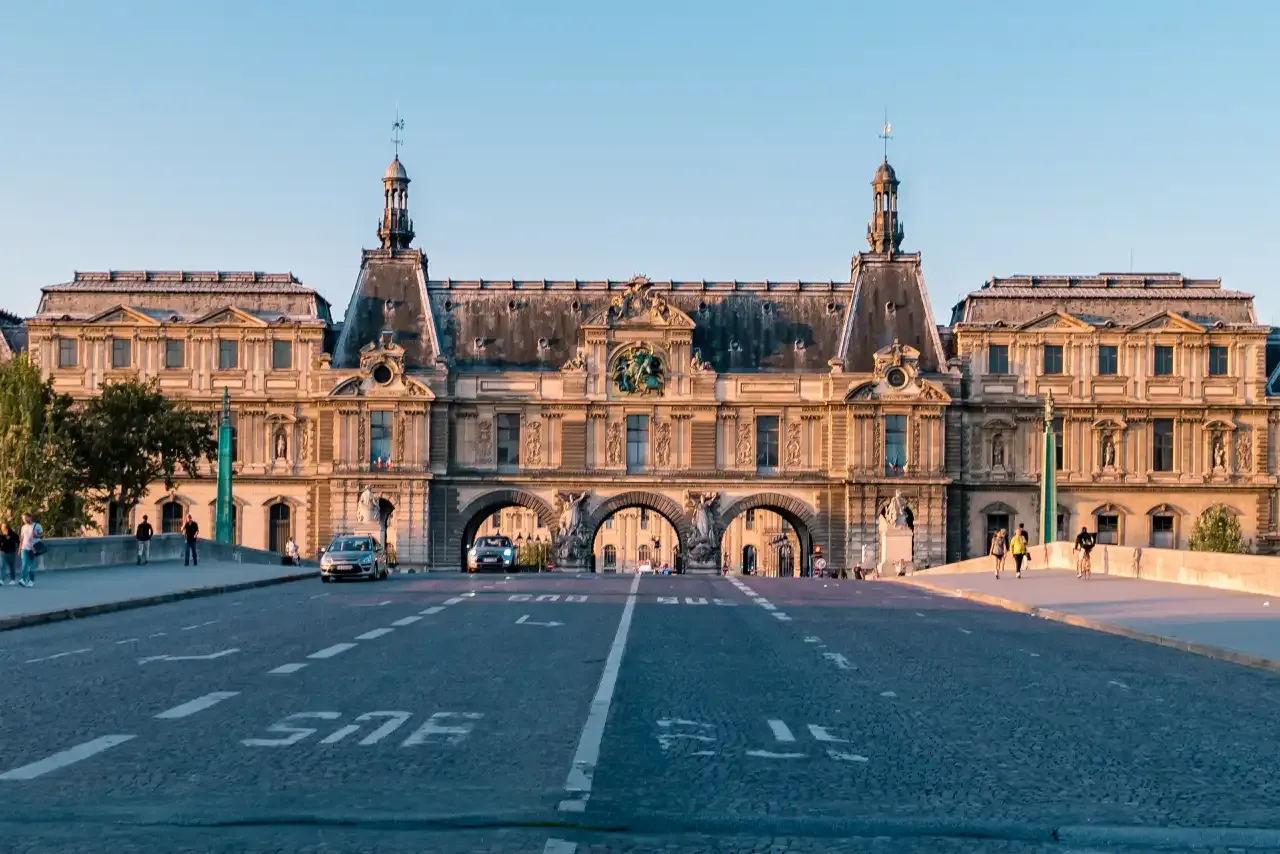
Louvre Museum
Because the Louvre Museum sits squarely within the central pedestrian perimeter of the first arrondissement, travelers attempting to reach the Louvre Museum encounter police checkpoints along Rue de Rivoli and connecting quays. Taxis, private shuttles, and rideshares cannot drop passengers near the pyramid entrance of the Louvre Museum during active enforcement hours, forcing drivers to divert to external boulevards.
Consequently, visitors heading to the Louvre Museum must walk across designated access corridors or bypass street restrictions entirely by riding metro lines 1 and 7 directly into the Palais Royal - Musée du Louvre station. Planning arrivals ahead ensures ticket holders enter the Louvre Museum without missing scheduled reservation windows.


Venues unaffected by 'Paris Respire'
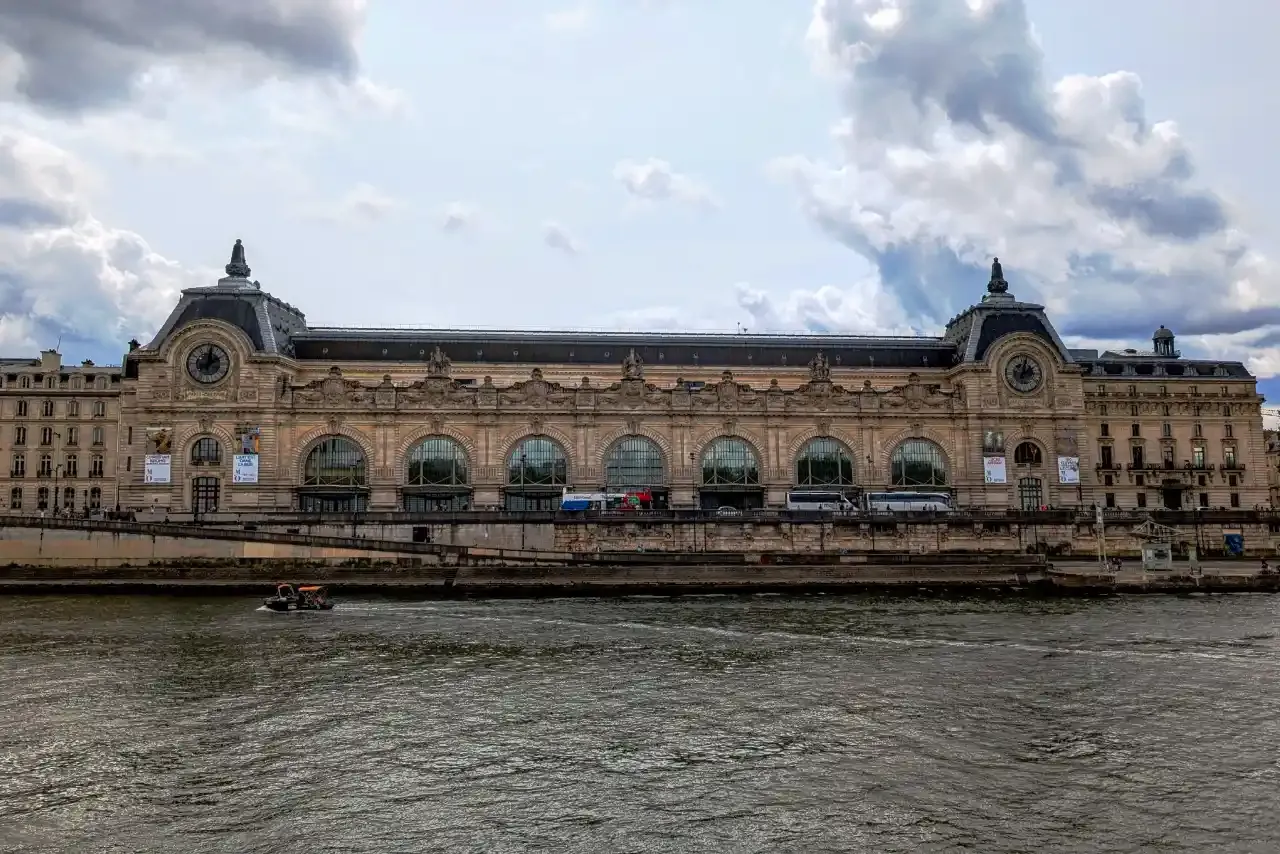
Musée d'Orsay
Located on the Left Bank in the 7th arrondissement, the Musée d'Orsay sits outside all pedestrian zones, allowing taxis and rideshare drivers to deliver visitors directly to the museum entrance without municipal traffic restrictions.
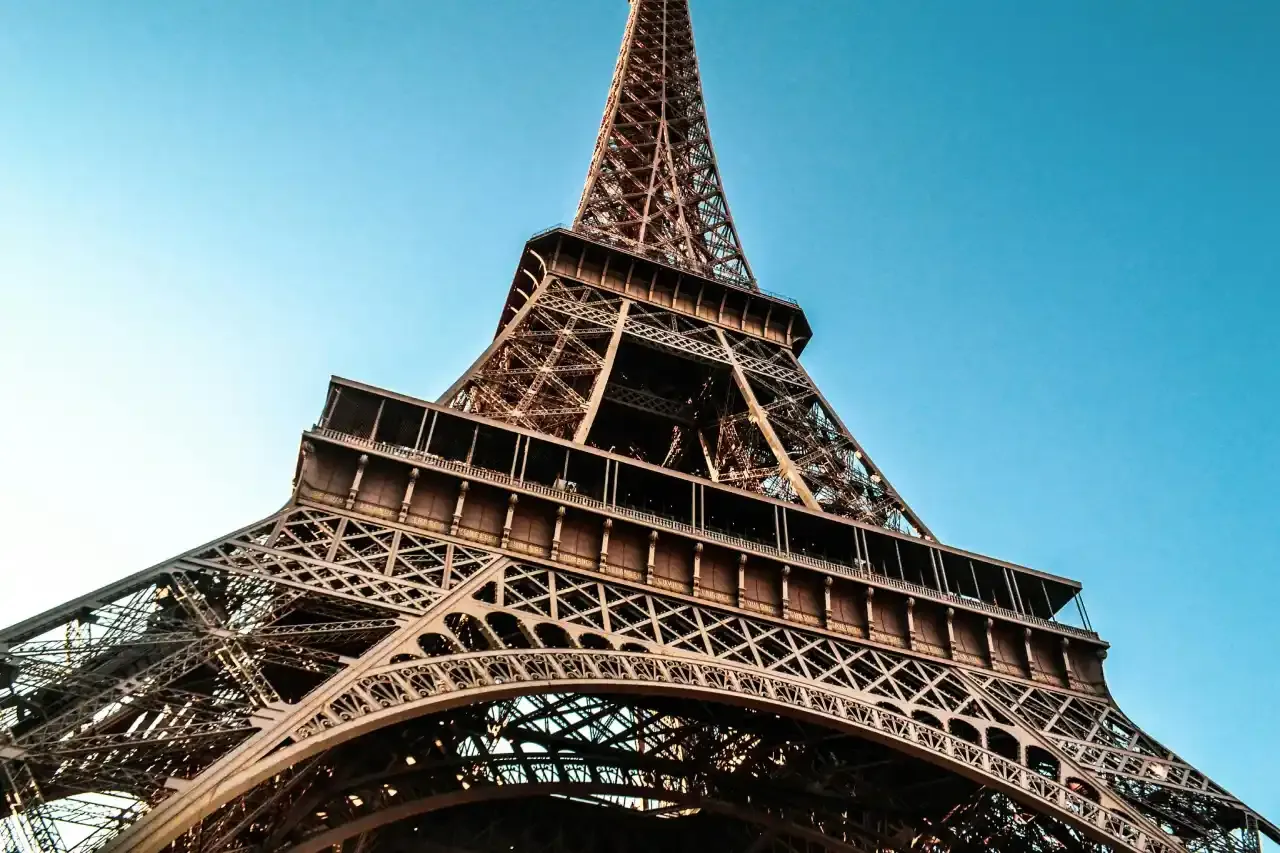
Eiffel Tower
Because the Eiffel Tower lies beyond designated pedestrian sectors, tourist shuttles, taxis, and public transit links serving the Eiffel Tower through the Champ de Mars corridor operate on regular schedules without disruption.
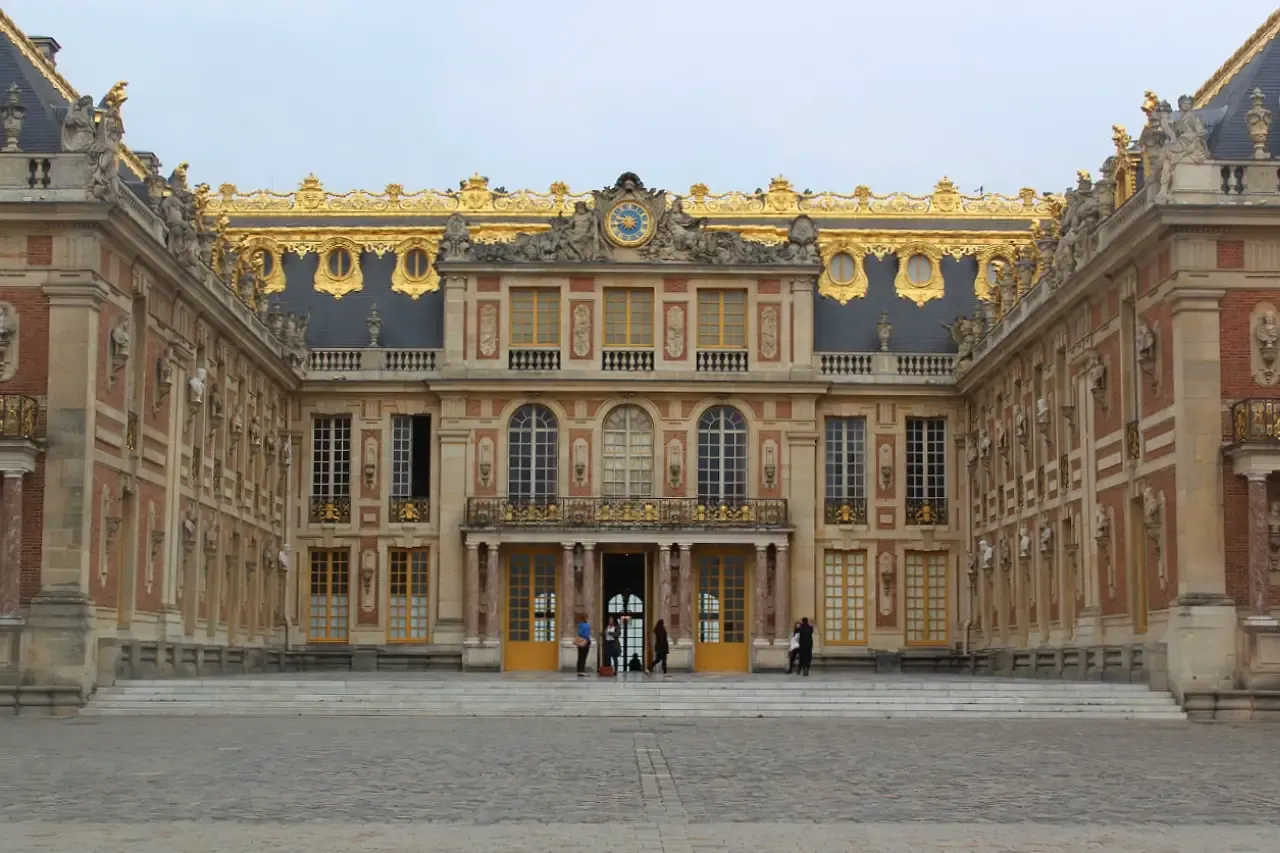
Palace of Versailles
Situated outside municipal limits in the Yvelines department, the Palace of Versailles operates beyond the jurisdiction of 'Paris Respire', leaving road routes and regional train links serving the Palace of Versailles unaffected.
Book your tickets to visit the main Parisian landmarks
Practical tips for traveling during 'Paris Respire' closures
- Boundary pick-up points for airport transfers: Travelers arrange taxi and rideshare pick-ups along exterior boundary boulevards, as municipal checkpoints block unauthorized vehicles from entering the 1st through 4th arrondissements.
- Subterranean rail transit: Underground Metro and RER lines operate on regular timetables throughout enforcement windows, delivering passengers directly to stations such as Châtelet, Louvre-Rivoli, and Saint-Paul without surface detours.
- Surface bus schedule verifications: Surface transit riders consult the official RATP application before departure, as municipal bus routes terminate early or bypass stops within closed perimeters.
- Pedestrian and bicycle route planning: Visitors schedule walking and cycling itineraries through the Louvre, Le Marais, and the Palais-Royal during closure hours to traverse central roadways free from vehicle traffic.
- Bike-share terminal monitoring: Cyclists track docking capacity via the Vélib’ application in advance, as high transit volume inside pedestrian perimeters routinely empties rental stalls and fills return bays.